McQuade & Hall. Looking and Seeing: An Introduction to Nalanda Miksang Contemplative Photography (Way of Seeing Book 1). Drala Publishing, 2015
The preface makes no bones about the authors' focus: "...we are really talking about Enlightenment."
The purpose of Miksang is not just to make pictures, but to reorient vision in order to wake up to the world beyond things. "The most direct way to spontaneous creativity [is] not in “breaking the rules,” [but] in making contact with the world before there are rules at all.” This can be accomplished, the authors believe, with just a short shift of orientation, or Enlightenment by a few degrees. They compare the mind to a ship, whose destination can be radically altered by a course change of just a few degrees.
The authors are students of Sakyong Trungpa Rinpoche, one of the first Tibetan refugees of the early exodus to settle and build a Buddhist community of westerners within the United States, and of his disciple, Sakyong Mipham Rinpoche.
This text promises to be the first of three outlining the practice of Miksang, a Tibetan word meaning "good eye." While the authors feel Miksang is best taught, or transmitted, in face-to-face encounters, they realize as well the value of texts in being able to provide more detail than available in workshops, seminars, or lectures.
Showing posts with label Looking and Seeing. Show all posts
Tuesday, June 28, 2016
Monday, June 27, 2016
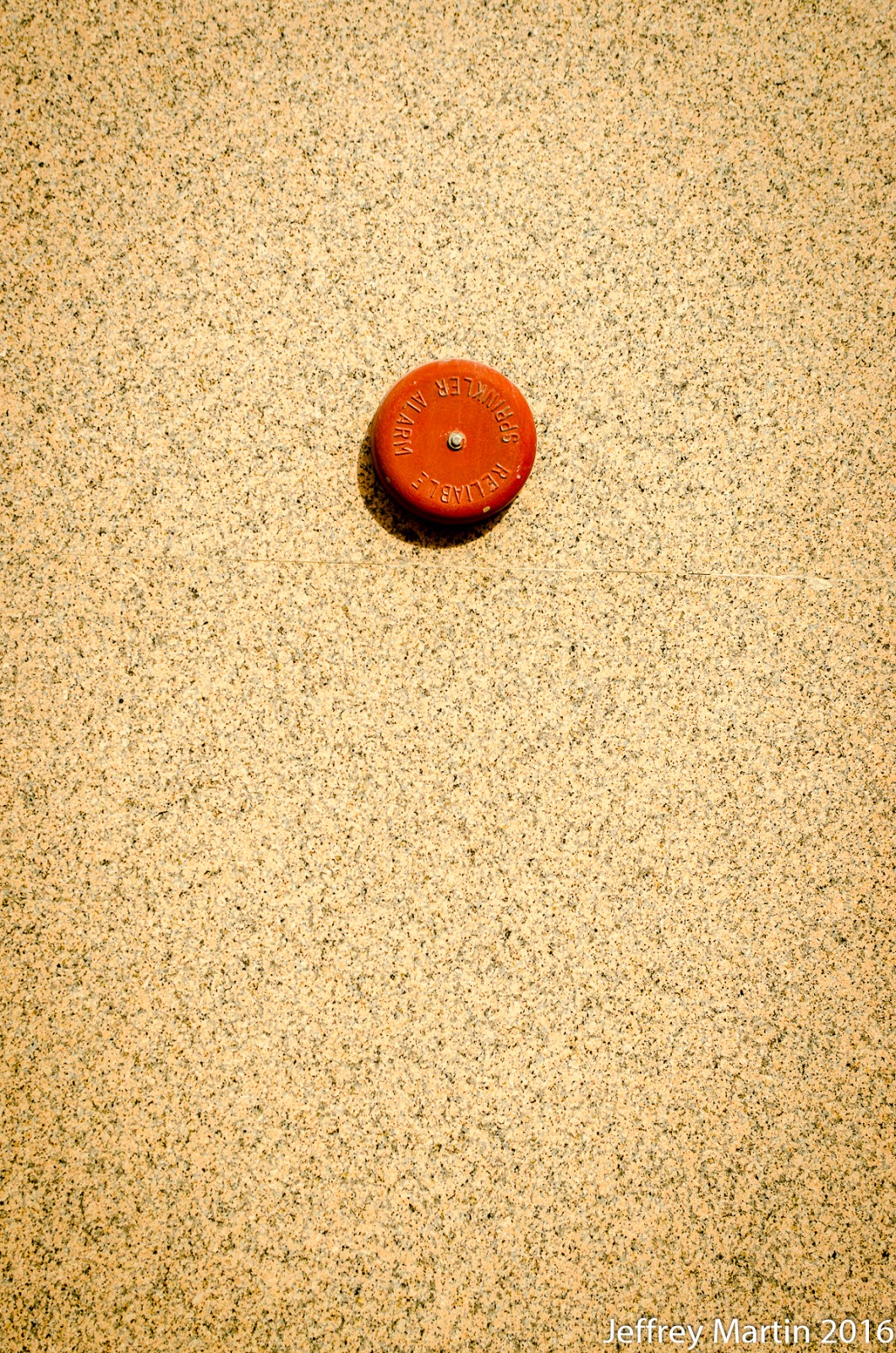
Looking and Seeing: Section Seven: Assignment: Dot in Space continued
I find I often don’t get far if I start synchronizing as soon as I walk out the door.By synchronizing I refer to the process of calming the mind, of letting thought settle and inviting an awareness of presence - the ambient temperature, the wind, the smell and sound of the environment, the weight of my body, the placement of the limbs, the rhythm of the breath. I do this in preparation for and immediately prior to shooting in whatever environment I happen to find myself.
This weekend I was shooting my neighborhood and had the intention of visiting a far corner that I don’t often get to. But following synchronization, I find my pace slows considerably - as I intend. And then I never get any further than a couple of blocks from my starting point because there is so much interesting detail nearby.
My solution was to walk deliberately to that far corner without my camera to hand and do my synchronization there, rather than right outside the door. I thought of my walk as driving to my destination and that turned out to be a workable solution.
Thursday, June 23, 2016
Looking and Seeing: Section Seven: Assignment: Dot in Space
They then use a common optical illusion, which can be seen in one of two ways, to demonstrate how the perceiver creates perception. They do this to make the point that perception and perceiver cannot be separated. There is, in other words, no objective visual reality.
The assignment is to go out and shoot some dots-in-space. The chapter then proceeds to a discussion of Dot-in-Space as a Level Two practice, which the authors describe as “the world of sense and sensibility, the world of ordinary magic and everyday beauty.”
The biggest difference from Level 1 is a refinement of vision, a pulling back in which the abstract becomes concrete. (This appears to be contrary to conventional photographic practice, which begins with shooting things before learning to see them as symbols.) There is direct engagement with things, rather than “a distanced documentation and representation.” In Level 2, “the dot is no longer a formal perceptual value.”
The assignment is extended to work at Level 2 and seeing things as manifesting things. Unfortunately, it is not suggested how one might engage this kind of vision, but the authors claim that in reviewing photographs one should be able to distinguish between L1 and L2 images. I’d like to see some side-by-side comparisons.
I will be shooting Dot in Space starting this weekend, but until then I have posted some recent images that seem to fit the bill.
#
Friday, June 17, 2016
Looking and Seeing: Section Seven: Assignment: More Space
I've been focusing on space this week. Besides setting my intention while out in the neighborhood, I've also taken to forums to seek feedback. So far the response has been sparse: one respondent noted a similar confusion.
I've also looked for additional text treatments on the subject (besides Karr and McQuade), but haven't yet found anything. If anyone reading this knows of any, I would be grateful to hear from you.
I've gone back to review Karr's chapter and note these salient points:
Wednesday, June 15, 2016
A look at some "official" space images
McQuade and Hall admit that space is the most difficult concept to teach and the most difficult for students to grasp. Perhaps no one understands, but is afraid to say so.
Given the confusion, I thought it best to review some of the images published on Miksang sites run by authorized teachers. If any images might offer a clue, it might be these.
To the right is a screen shot from the Space gallery at Seeing Fresh, a website to promote Andy Karr's Contemplative Photography, a somewhat secularized copy of Miksang from a Miksang student. The gallery features images submitted by students but selected by whoever runs the site, presumably Mr Karr or someone authorized by him.
Looking and Seeing: Section Seven: Assignment: Space
I went out with the intention of shooting space - and photographed a lot of stuff that wasn't. I paused to synchronize, focusing on the breath, the air as it moved around me, the temperature, my posture. After I calmed down and went looking, I found all kinds of interesting things, but little that might be space, Perhaps I was too concerned with shooting physical space - openings between things. I think this is what happened in Japan the last time I did this exercise. I came away with some interesting images, but not perhaps what Miksang instruction intends.
Tuesday, June 14, 2016
Looking and Seeing: Section Seven: Space and Dot in Space
![]() |
| Dragon Mart: Space? |
Miksang, speaks of space and dot in space. The art equivalents are negative and positive space. This assignment begins with Space (negative space).
Space
Space is everywhere and nowhere. The authors suggest that photographers work with visual space - not physical space. This is an exercise in foregrounding the background. It helps, they say, to try and put away common conceptions of space, namely: 1) space as what is between things, and 2) space as what surrounds things. Both start with things and try to identify that which is not the thing. Space is treated as something in relationship with things, or something that is not a thing.
However, despite their entreaties, it seems impossible to escape these conceptions. Here’s how the author define the approach:
Sunday, June 12, 2016
Looking and Seeing: Section Six: View Interlude
It seems the authors' use of view is equivalent to philosophy, one’s “point of view.” This section dips into the ideas underlying the practice. The authors proceed with a review of the flash of perception as an unconditioned experience, something that happens to us, something that interrupts our everyday experience of the world. The reality is that this flash is the reality behind the ideas that color our understanding of the world. Our ideas are the equivalent of clouds, the flash of perception a gap in the clouds allowing us to see what has always been there waiting for us to discover (or perhaps rediscover, as children seem to have largely uninterrupted access).
Subscribe to:
Posts (Atom)